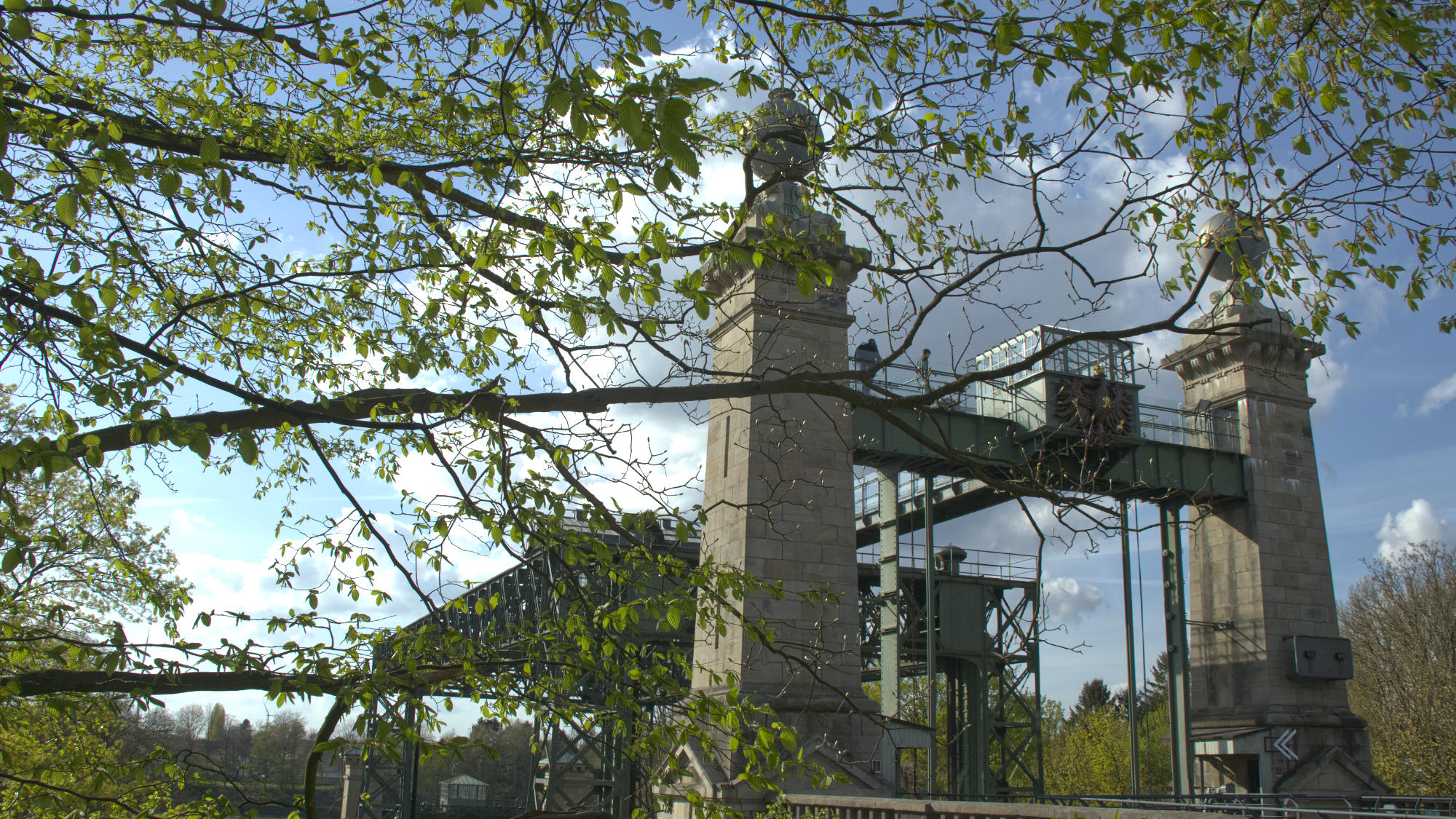
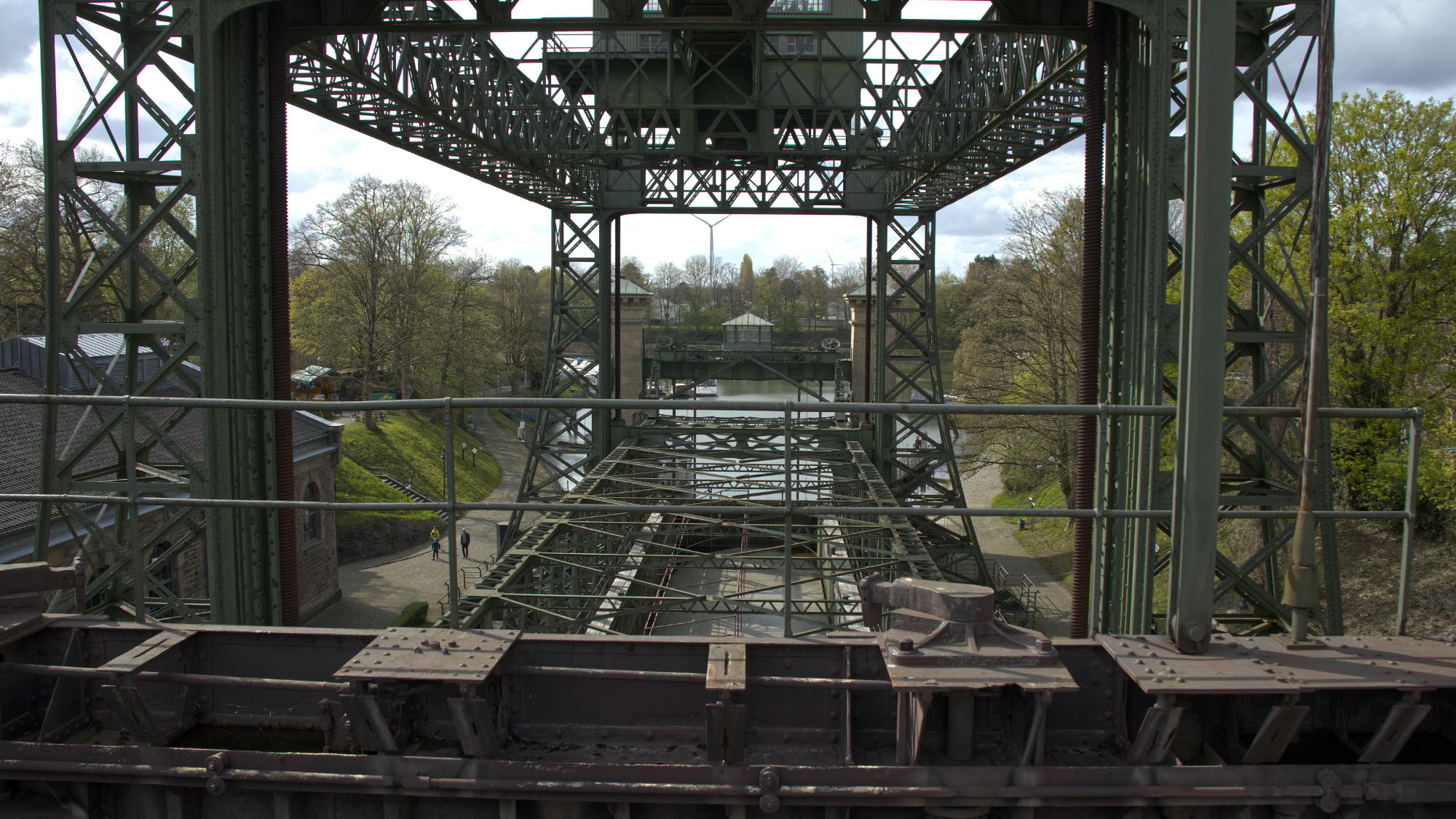
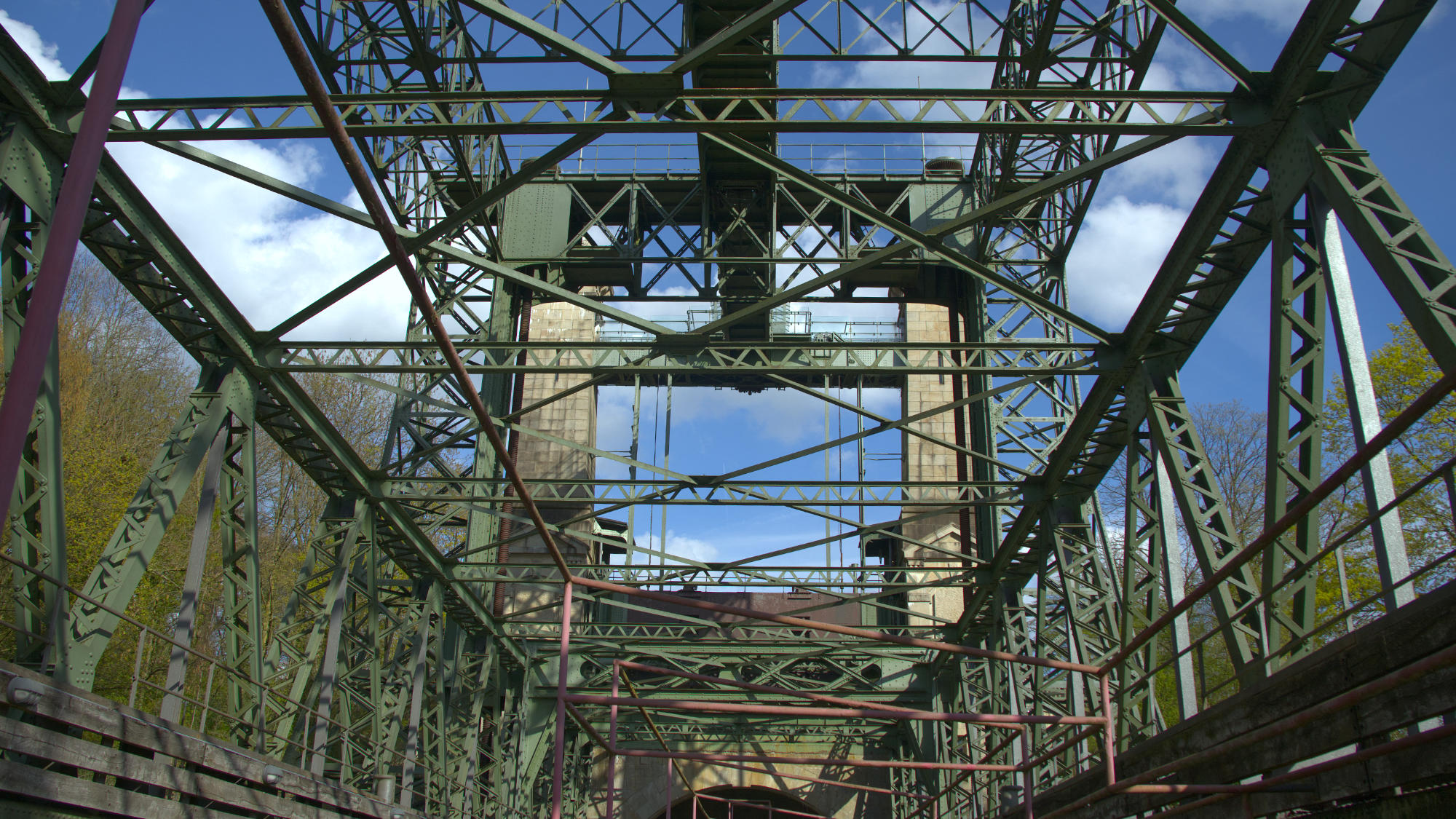
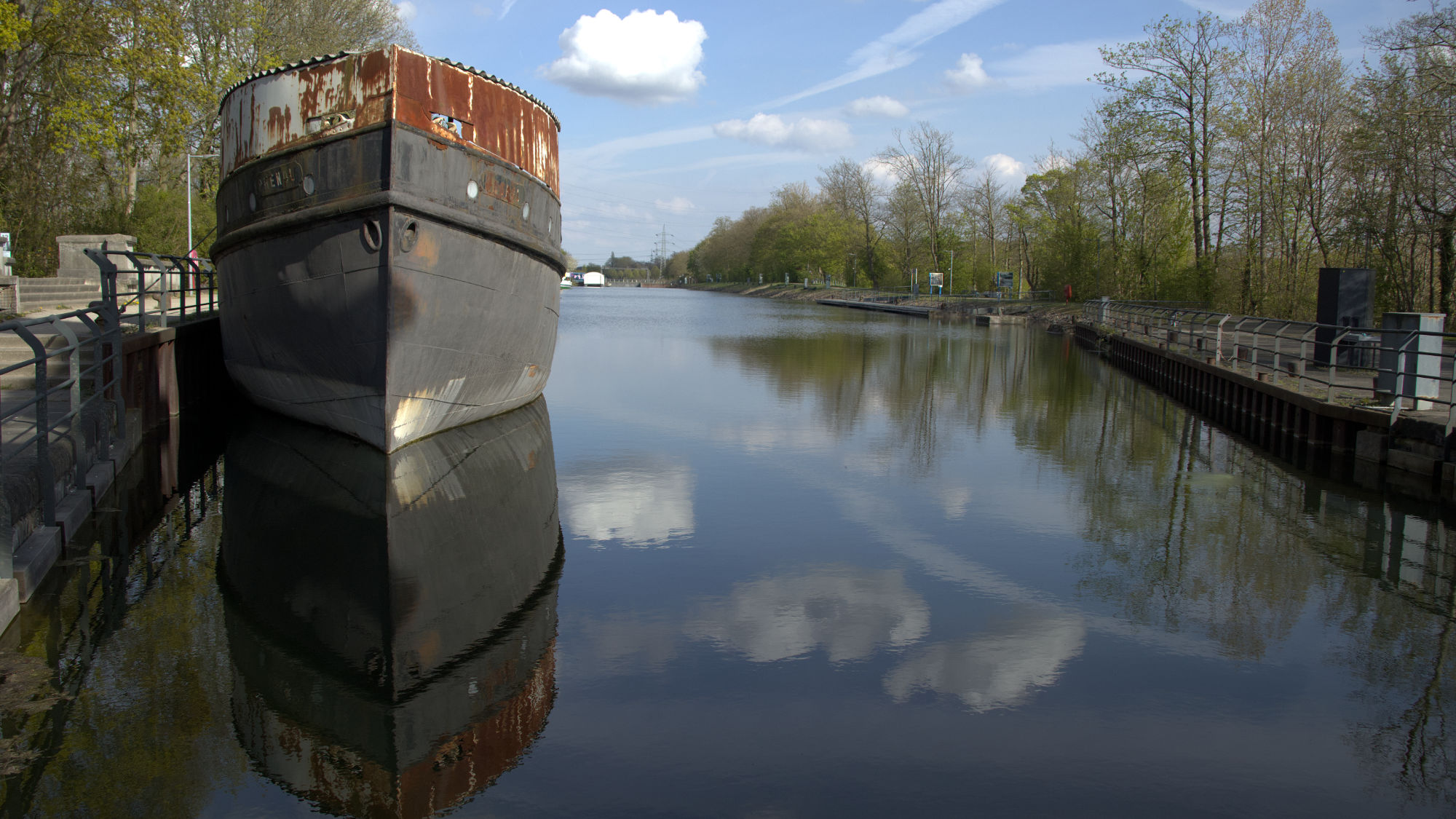
After work yesterday I didn’t drive straight home but to the historical shiplift Henrichenburg. It’s about equal distance between work and home and only a bit of a detour. I had a reason for going there though, which I will tell you about a bit further down. First of all a few photos of the always interesting to look at and walk around historic shiplift.
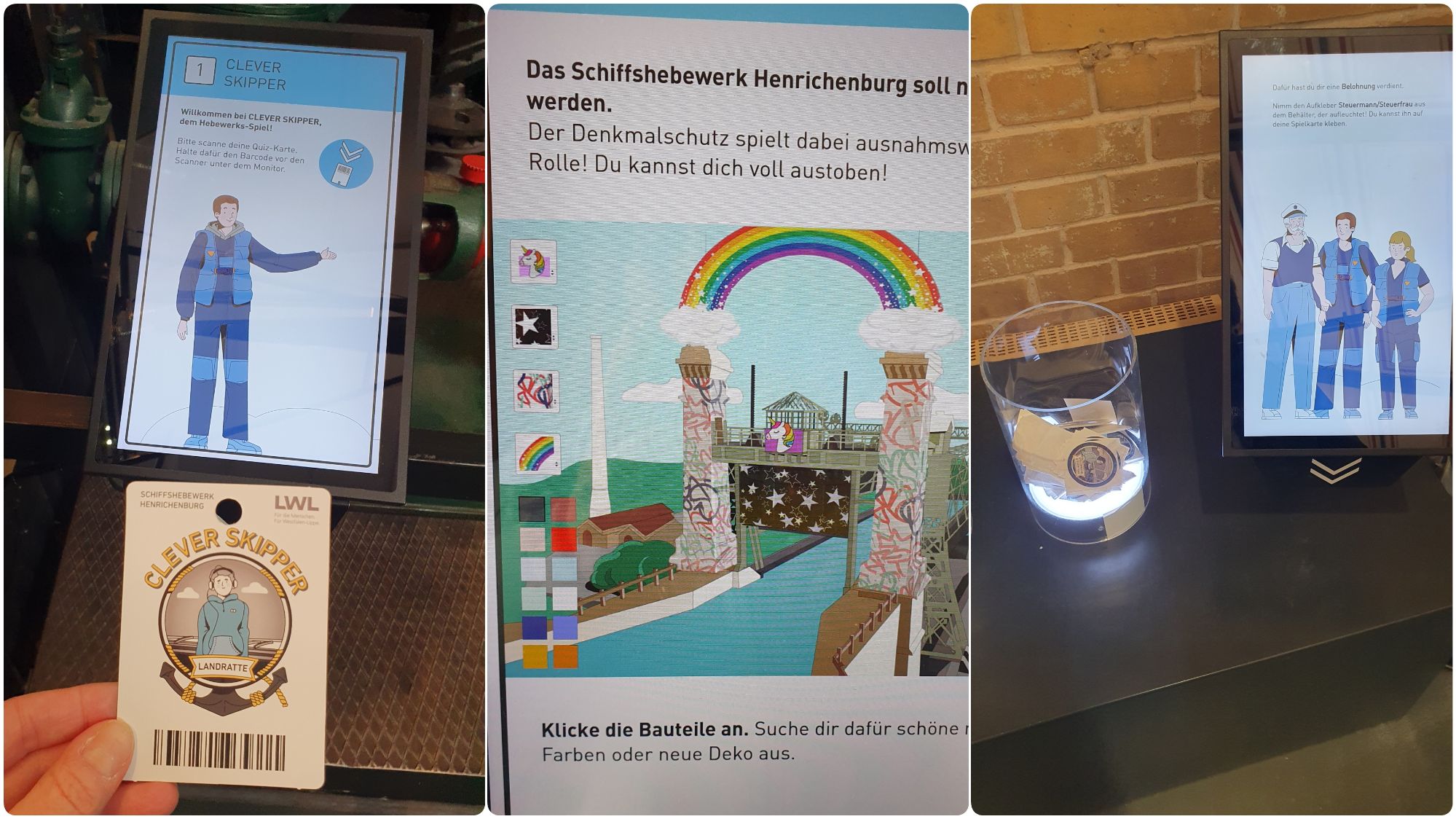
I’ve been inside the small shiplock museum several times before, but walked through it again regardless. I don’t recall this interactive activity from my last visit. So of course I did it, no matter if it’s more aimed at young people or not. And I got a sticker I could put on the ID card and take home in the end. Success!
A couple of weeks ago I had by chance read that the shiplift museum hosts a big exhibition about shipping containers. [German press release from last year].
I only now managed to actually visit very shortly before it will closes (tomorrow, 12th April) and I wish I had gone earlier. Because I would have loved to recommend it to so many people (I even did to a few last night to be fair but it’s quite short notice).
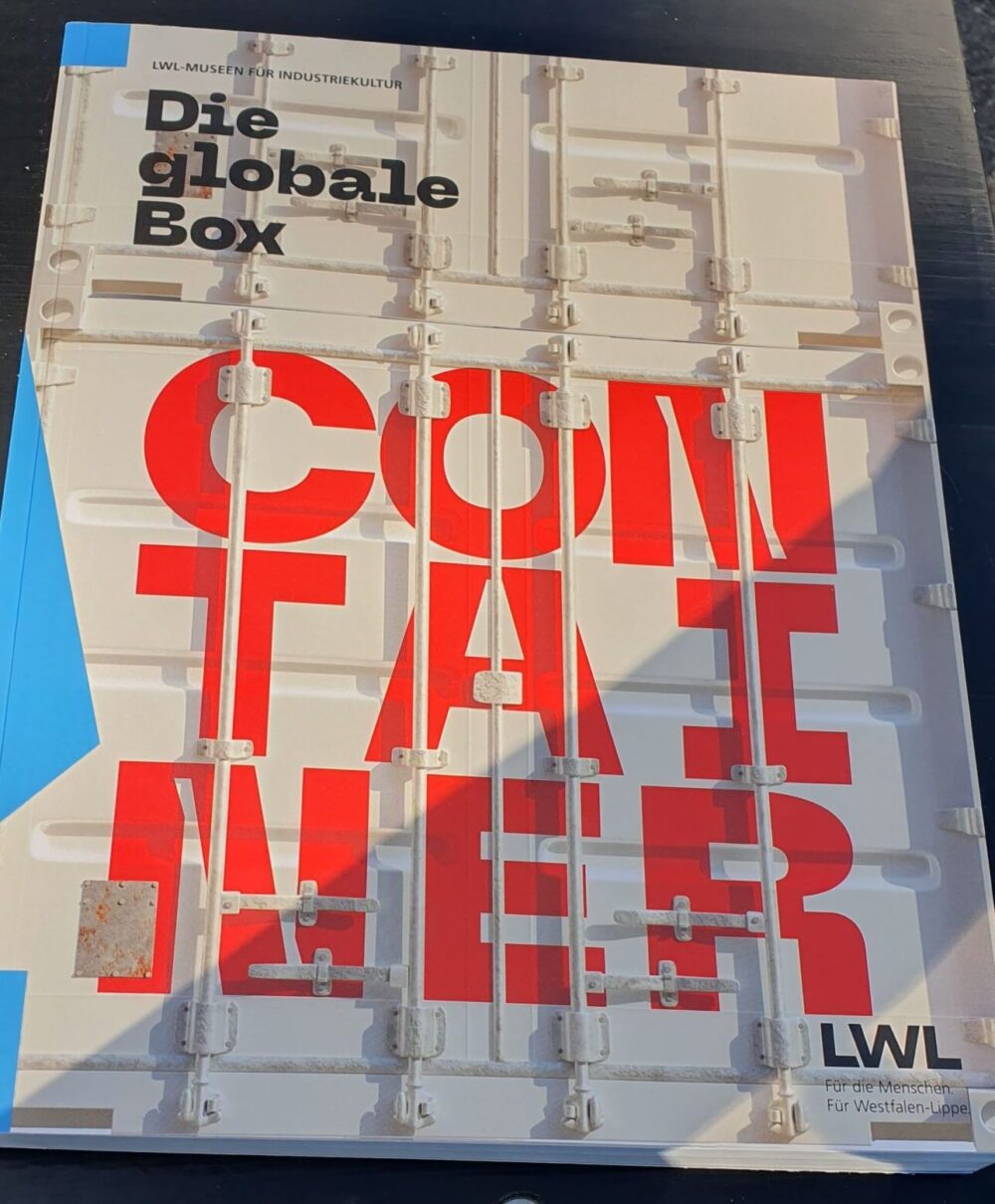
Do I have a special nerdy interest in shipping containers? I didn’t think I had, but the article I read about the exhibitiion obviously made it look super interesting. And it was! To me anyway, so maybe I do have a bit of nerdy special interest. But if you really think about it for a moment the arrival of the shipping container as we all know it, definitely changed the world in a similar way as the printing press or the internet. At least I left this exhibition very convinced of that statement. I even bought the expensive exhibition catalog to be able to read up on various aspects of it all.
The exhibition touches on all kinds of aspects: the history of the design / invention of the container as such. The use of it. The massive impact the ubiquitous use of shipping containers had and has on global trade and global traffic and economics and societies and the ecosystem. The impact it had on architecture, urban design and art itself.
There was quite a lot to see and think about, as any good exhibition should leave you with.
One tiny thing I would have given critical feedback on (if there had been a feedback opportunity somewhere) was the layout of the exhibition. I get that that there might have been spatial restrictions along the canals and the available space. But there were 15 sections which sort of build on one another: 1 was “the container”, 2 was “the technical norm”, 3 “the beginnings”. But that was the layout when you entered the exhibition from the regular way (entrance – shiplift museum – shiplift – upper canal…) from the left
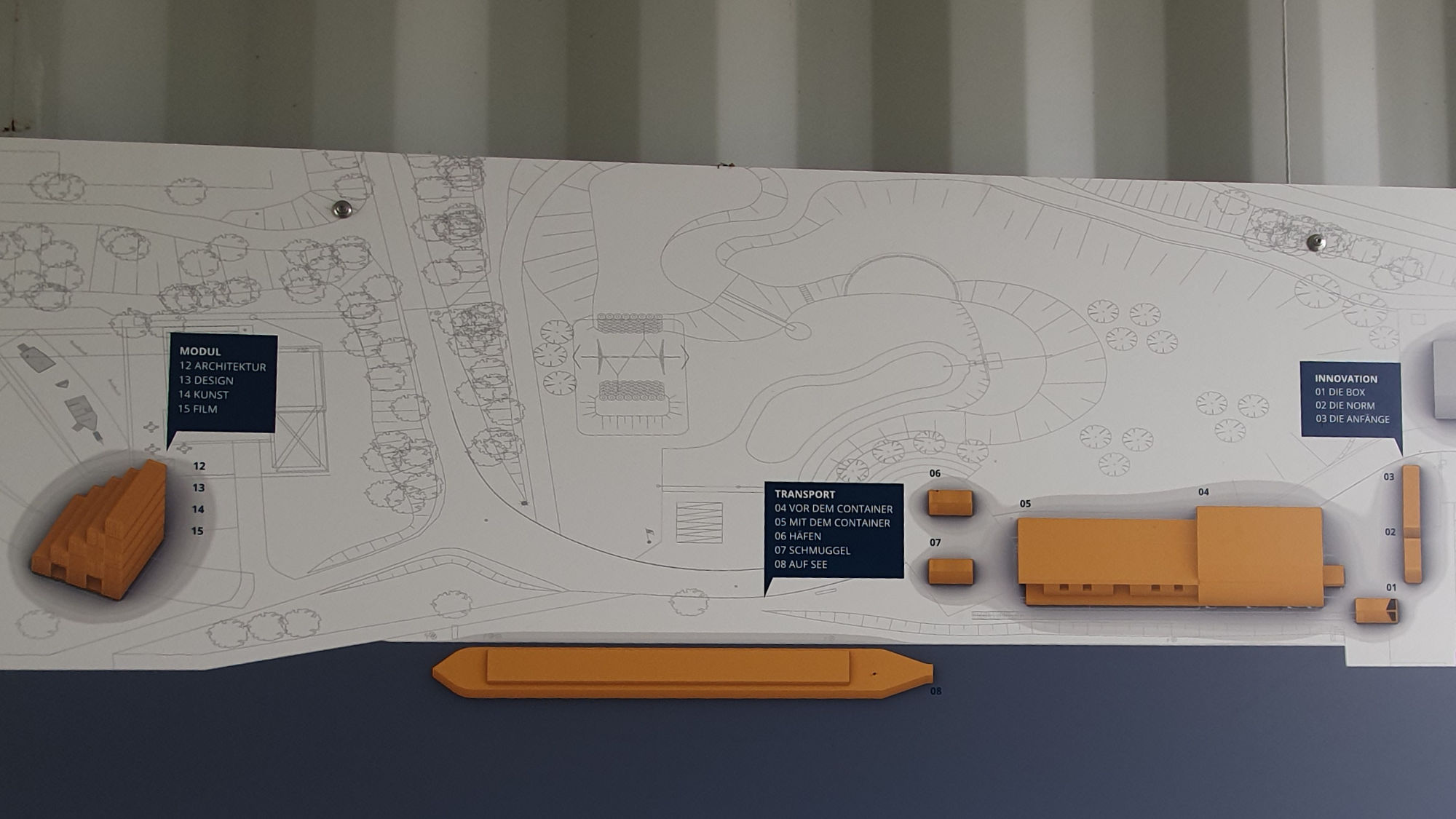
Section 9 – 11 were further on the other side of 1 – 2 – 3. A bit weird. When I got home and had a good look on that photo on my phone I realized that I had missed going into section 4 and 5! Probably because I had already walked past the building on my way to have a look at the “offical” starting point of the exhibition. So it’s a good thing I spent money on the catalogue.
Anyway here are a few of my photos in official order of the sections, with the occasional additional comment.
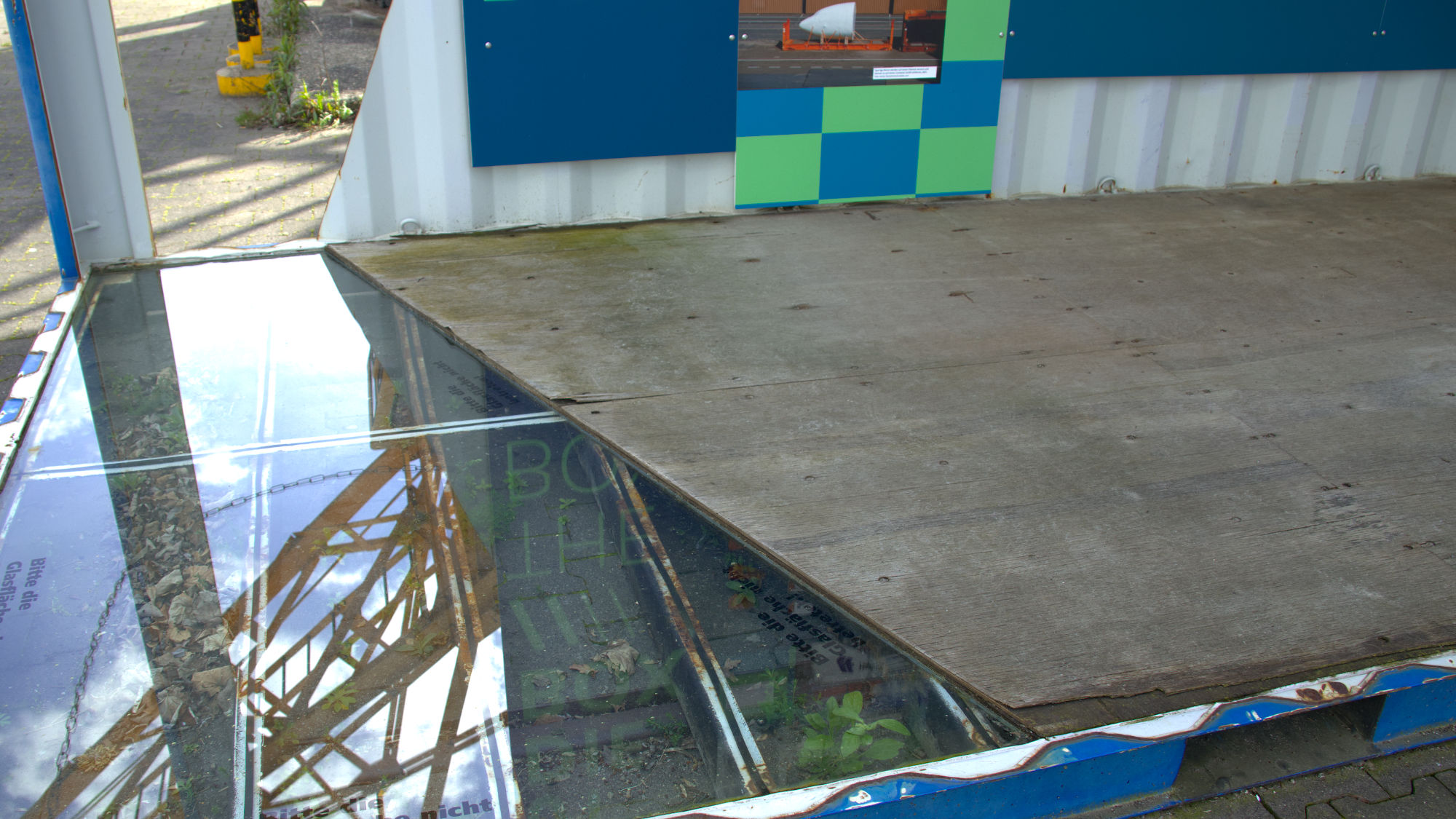
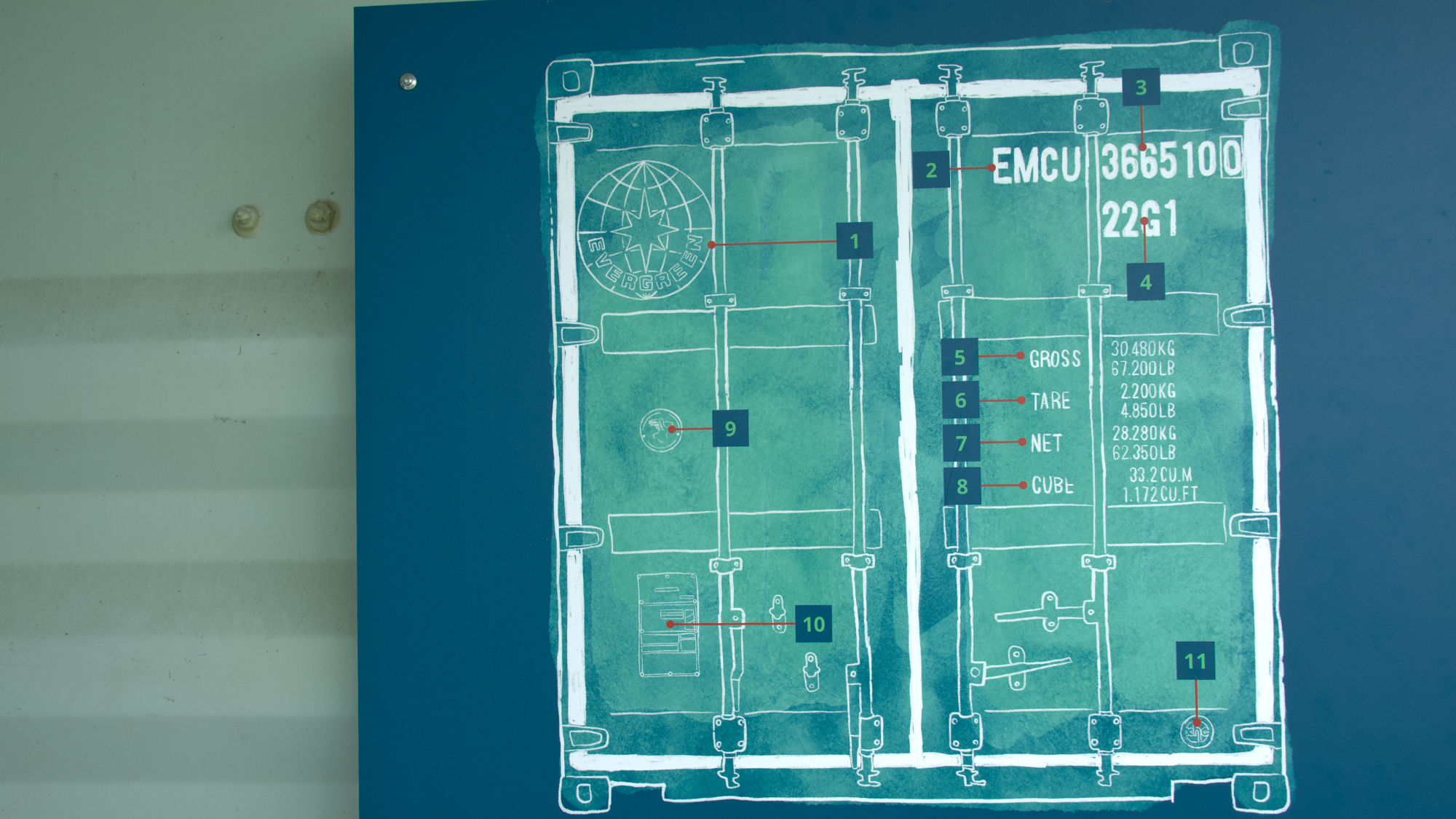
There was a whole lot of information about all the technical aspects, the material, the various sizes, the locks they need to interlock the containers for transport. I also very much liked the drawing of the container side with all the symbols.
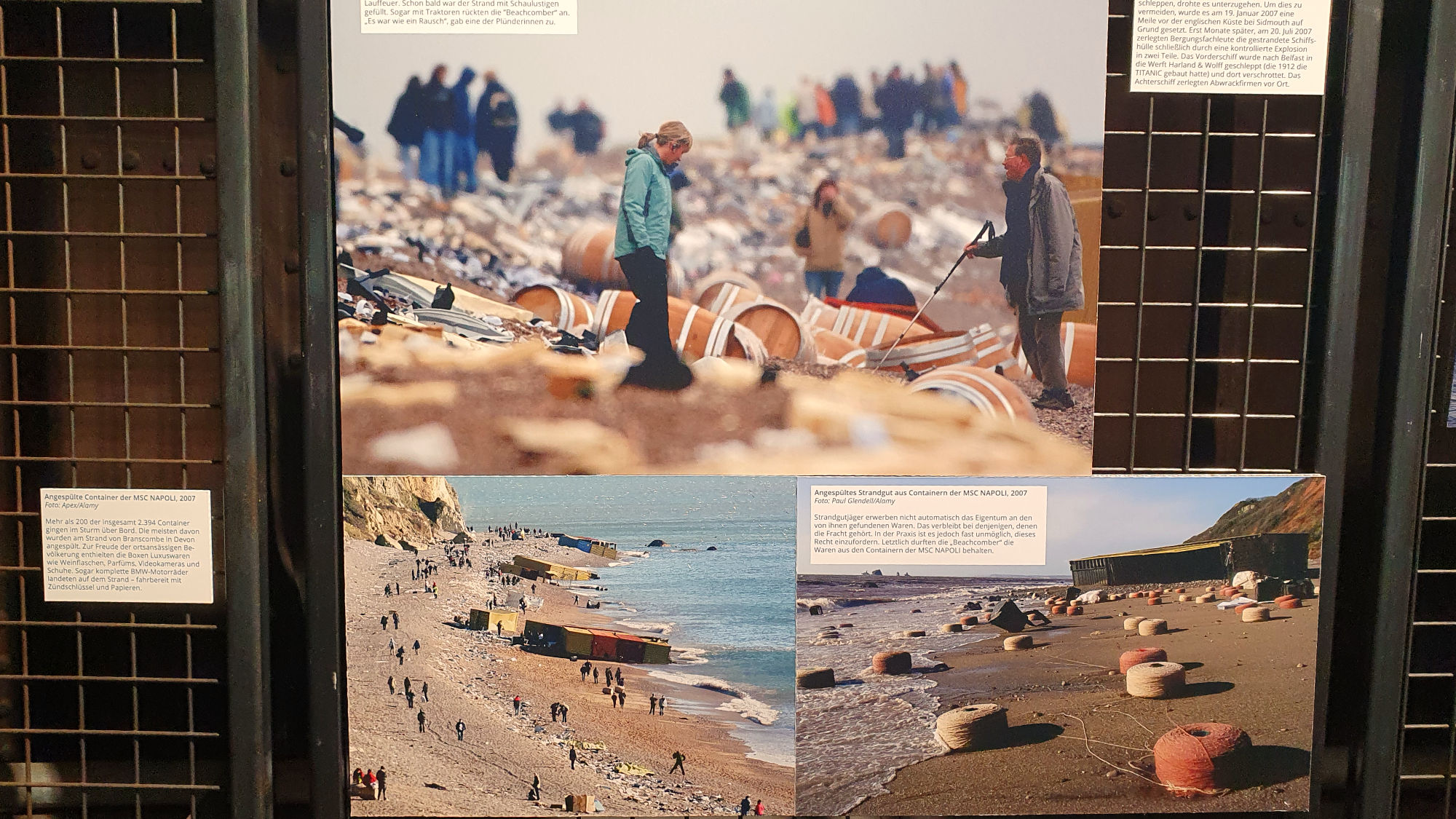
Another section – all large photos set up below deck in an historic barge – were about various accidents and how that impacts the ocean but also the coasts and the people living there. Here are a few images from the south of England in 2007. I do not recall the “big LEGO spill” in the late 1990s in the same region of the world. Someone wrote a book about that though and I might jotted down the details.
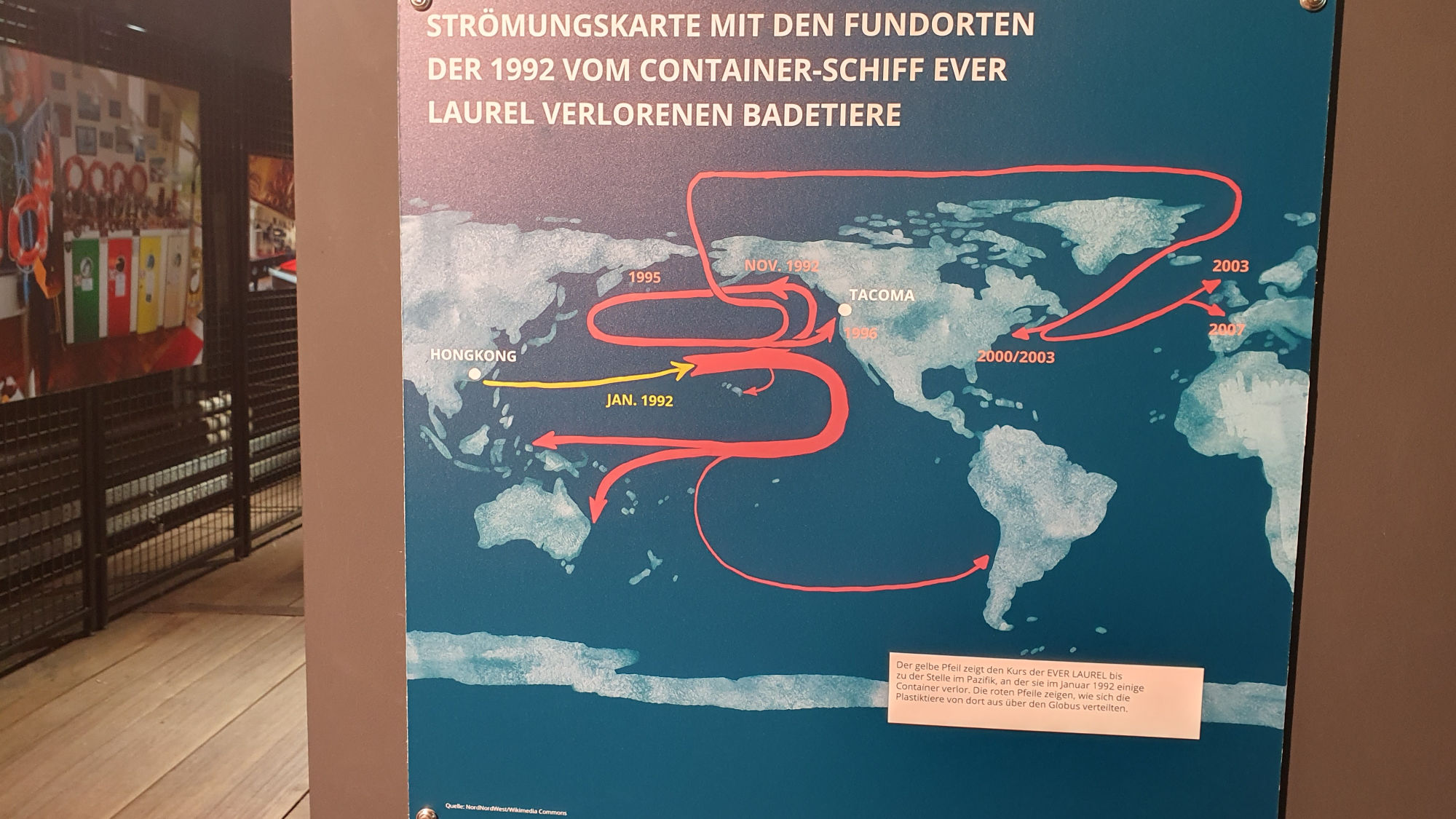
In 1992 a ship going east from Hongkong lost containers filled with rubberducks (and other plastic bathtoy animals). Below is a map of where they were found many many years later.
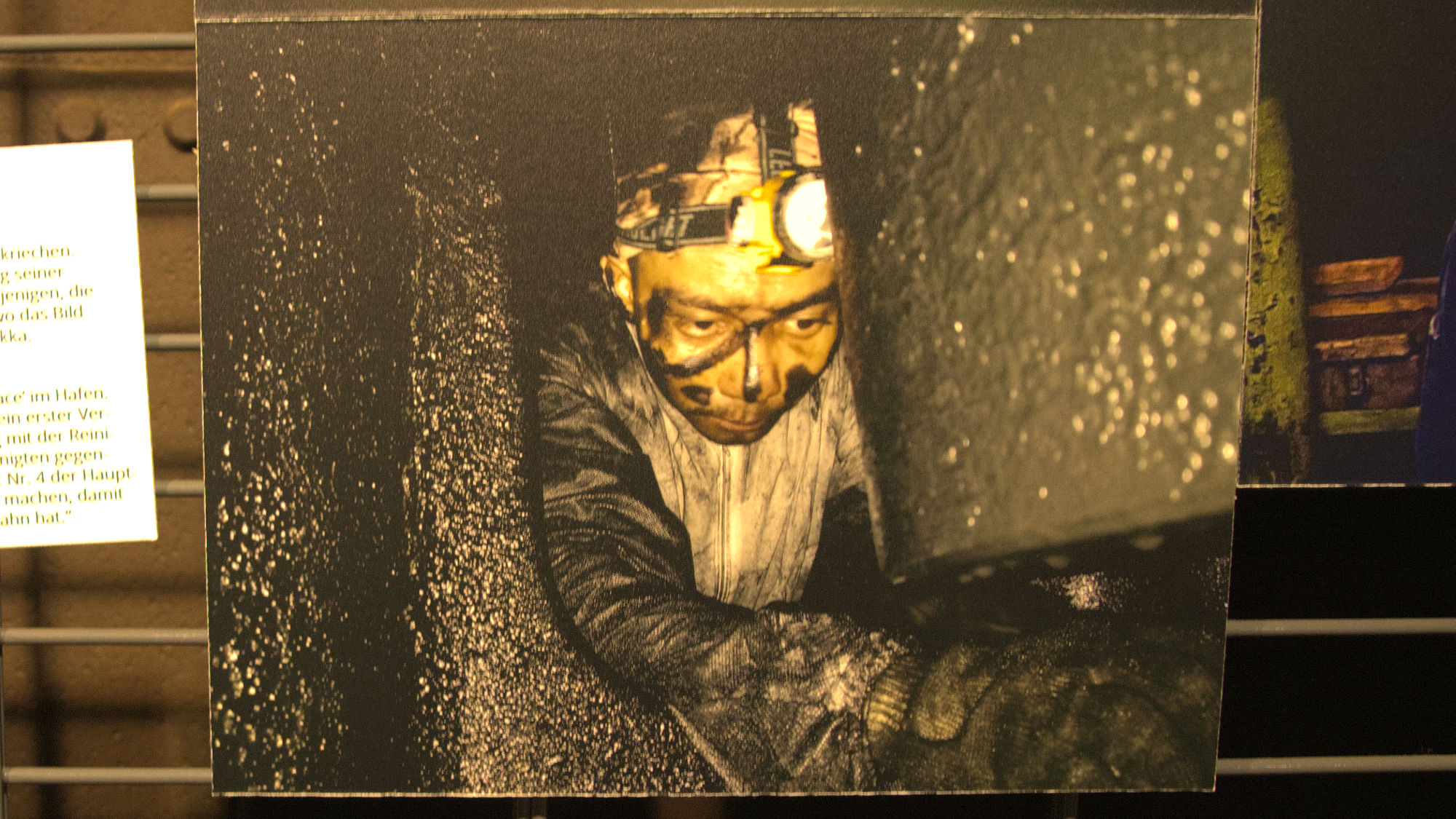
Down below also was another photo exhibition on the crew on container ship and the harsh condition they work and live in. The dangers of ship wreck and other technical failures, the months long seperation from families and all that. I didn’t take a lot of photos there (only a few with the mobile phone), maybe because I thought it was too personal? But also maybe because the lighting below decks wasn’t that good.
This photo of a young man – on the bottom of the ship’s workers’ hierarchy so he has to do the most unpleasant (dangerous, dirty jobs) – reminded me so much of paintings / drawings of climber boys and chimney sweeps and children working in coal mines a few centuries ago. Heartbreaking in way, I thought.
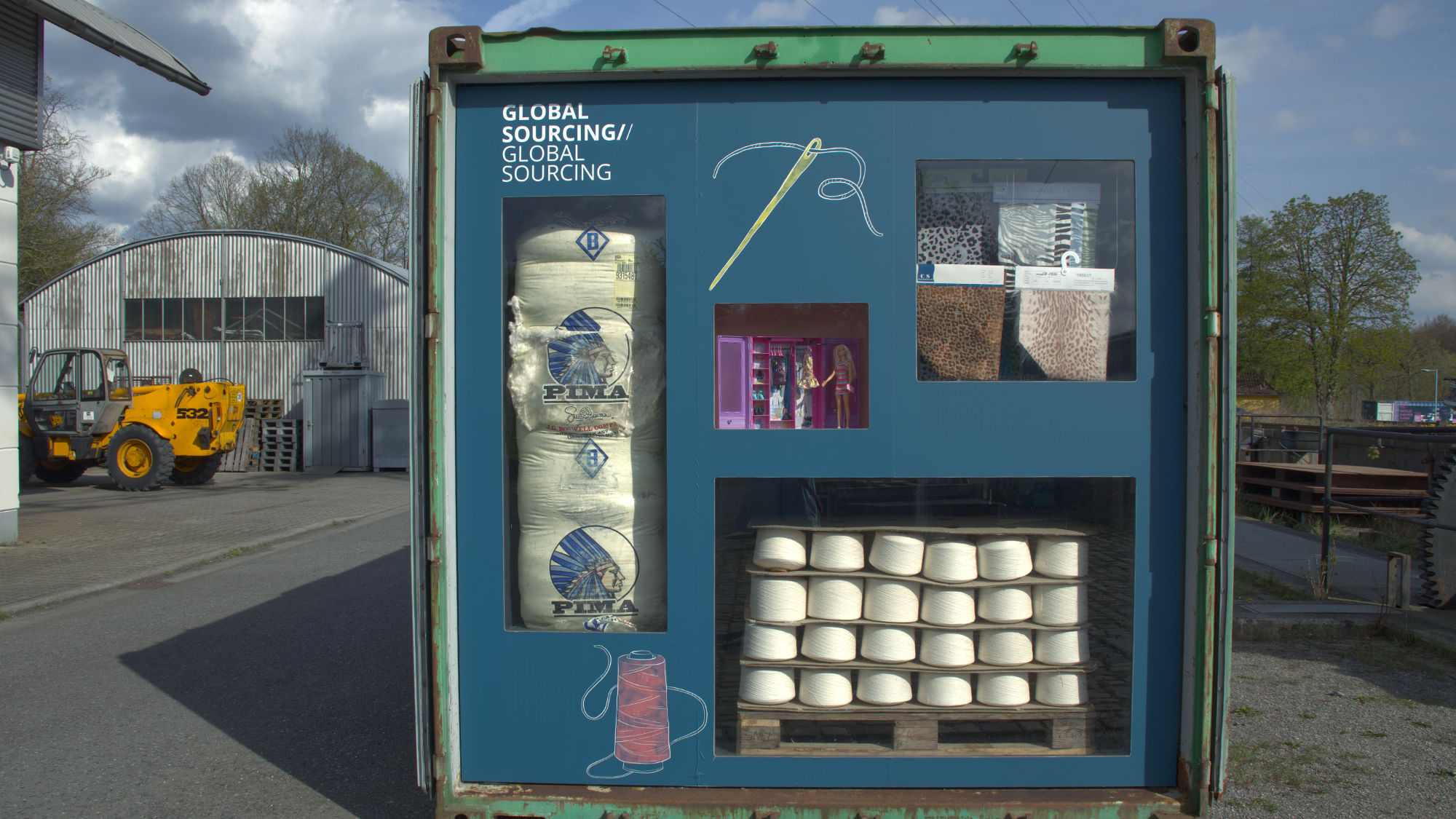
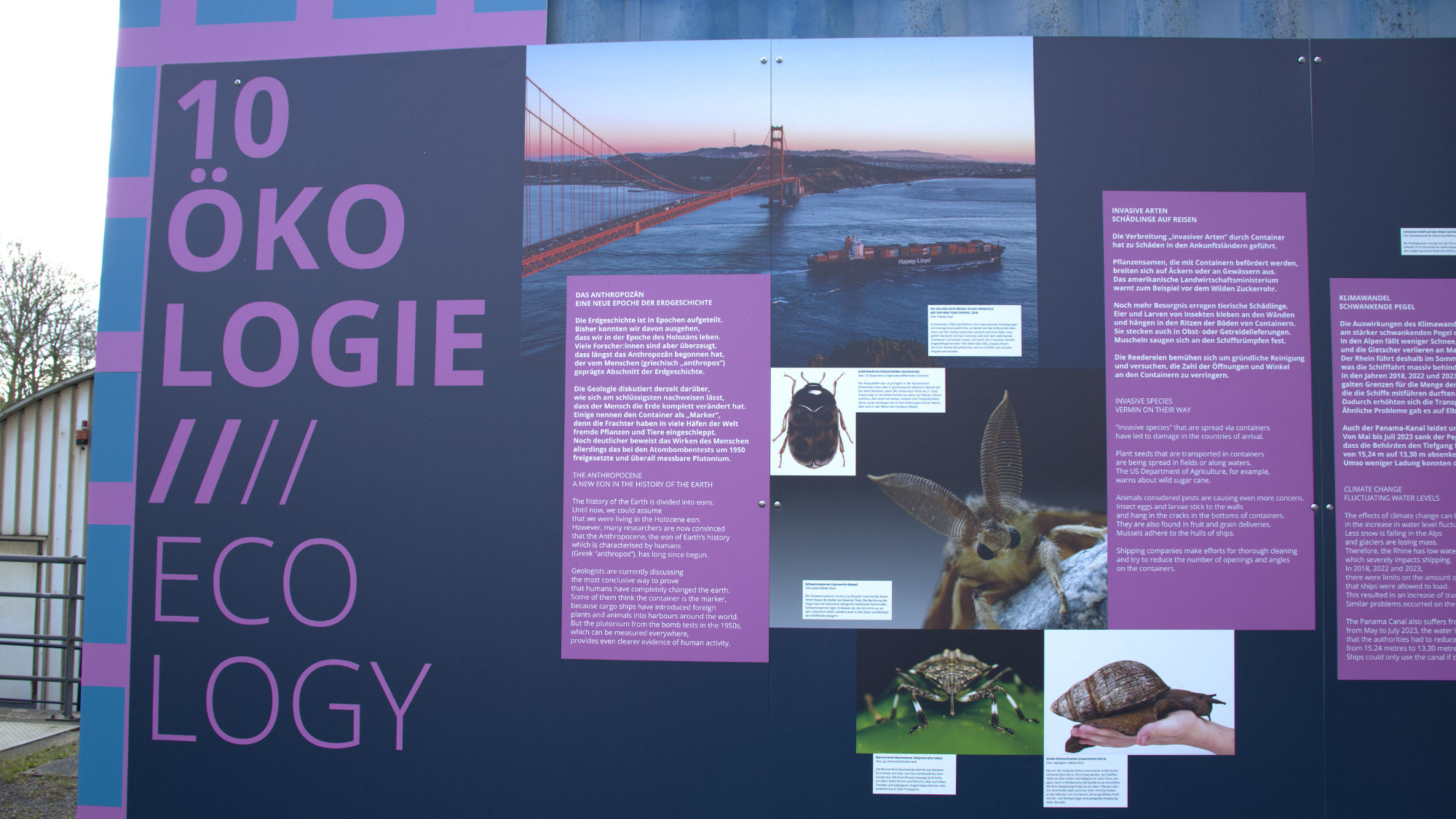
Other sections dealt with the variety of goods that are shipped in containers these days. At some point it was stated that 95% of the things we own have been in a shipping container at some point. That’s probably true but staggering regardless, when you think about it. The exhibition shows lots of examples, clothing and phones and computers and computerchips and all that. It also show the ecological impact the shipping industry has by now. The large carbon footprint, the pollution, transfering non-native / harmful species across ecosystems. You name it.
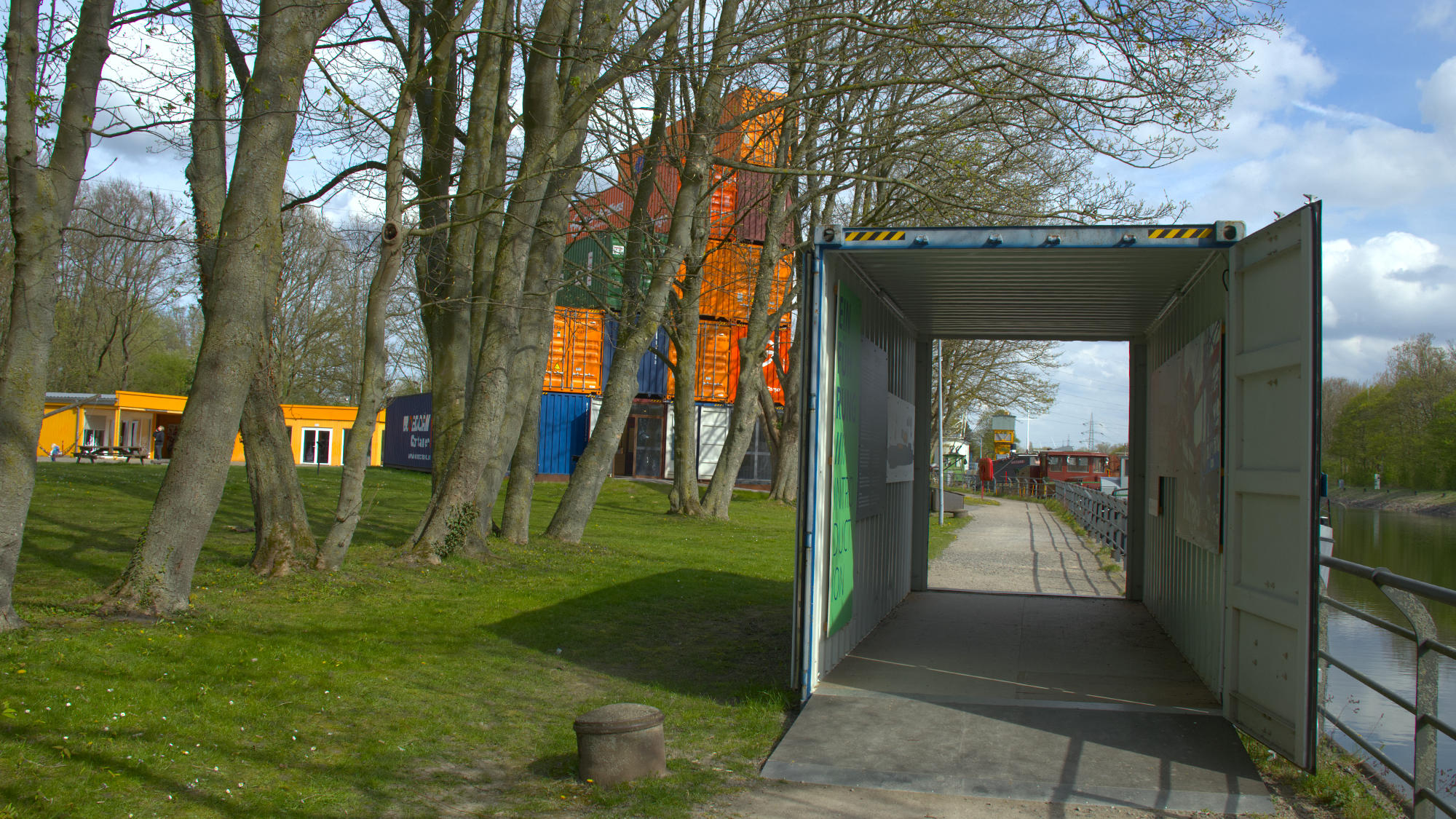
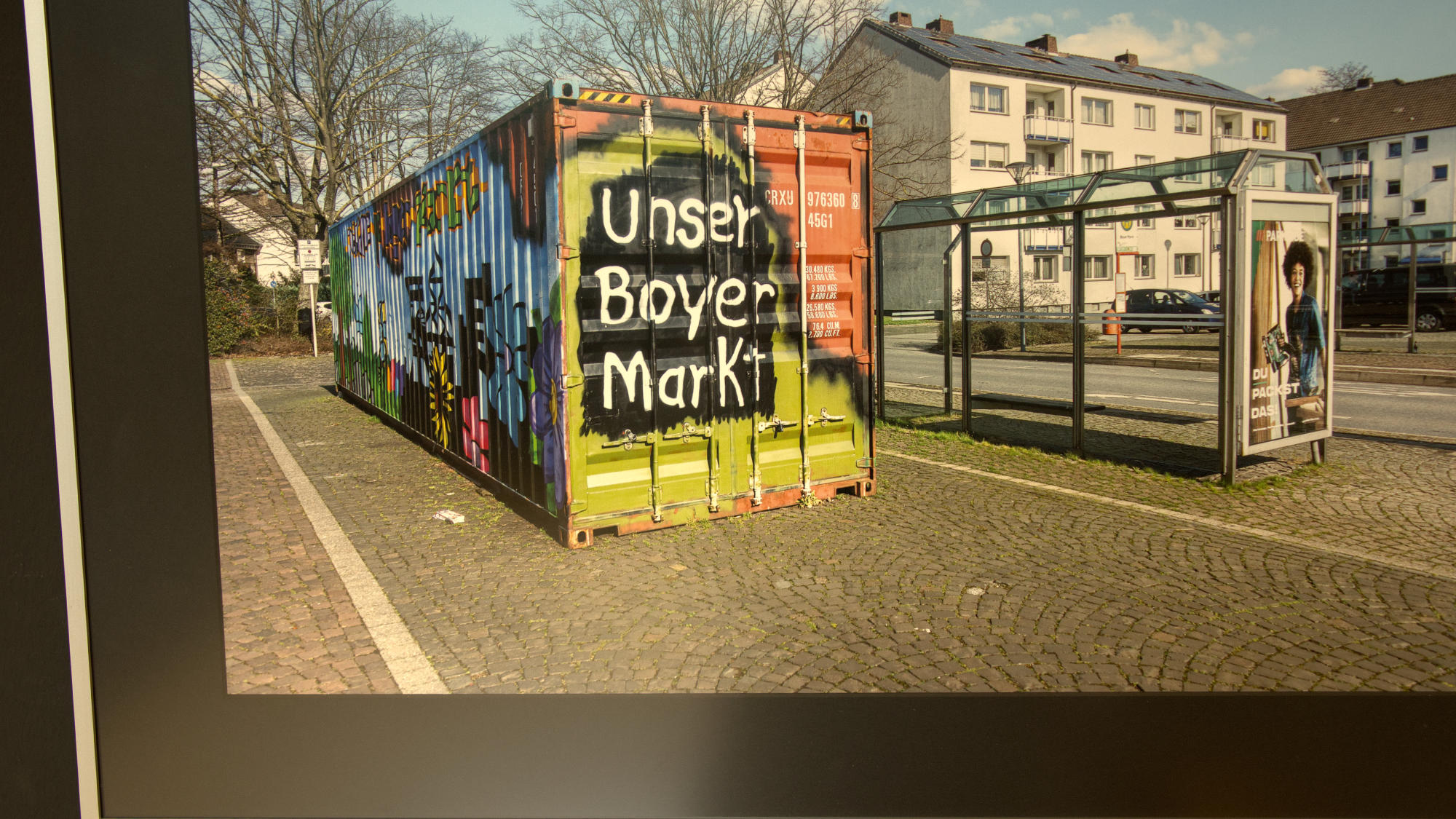
The exhibition ends – or rather starts if you walk into it the only way to get there 🙂 with a special made container building and exhibition space inside (and on the walls outside).
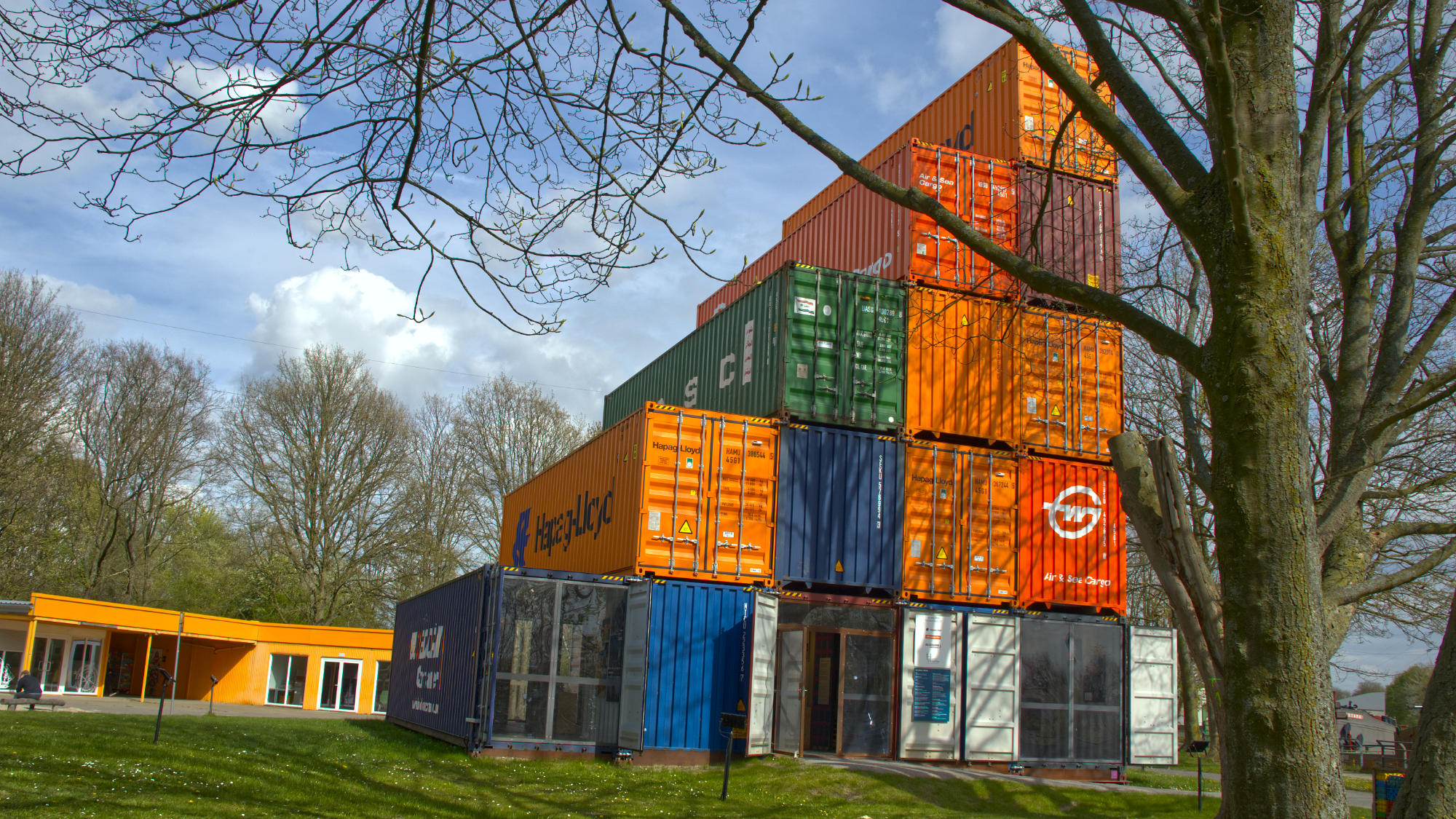
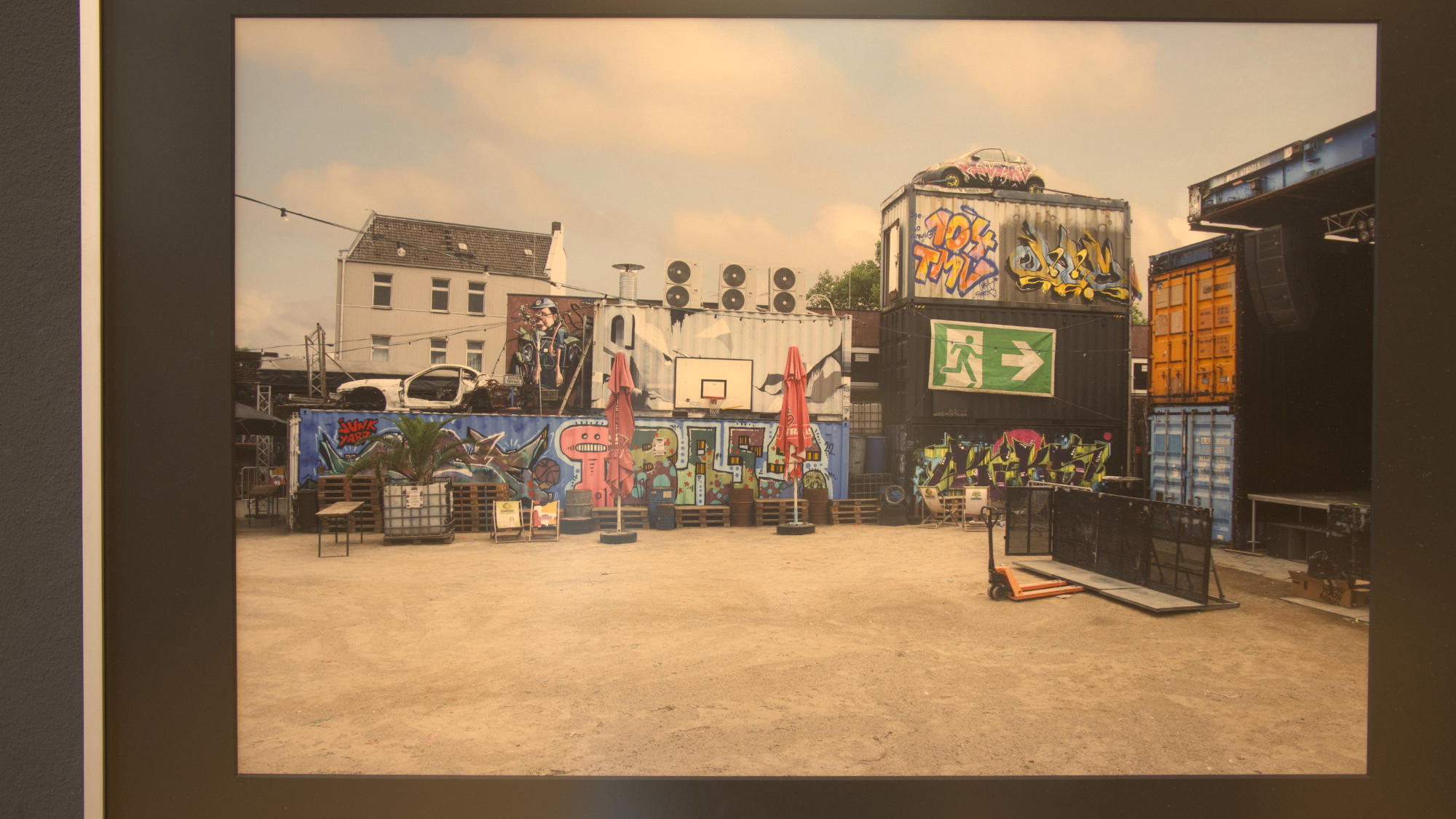
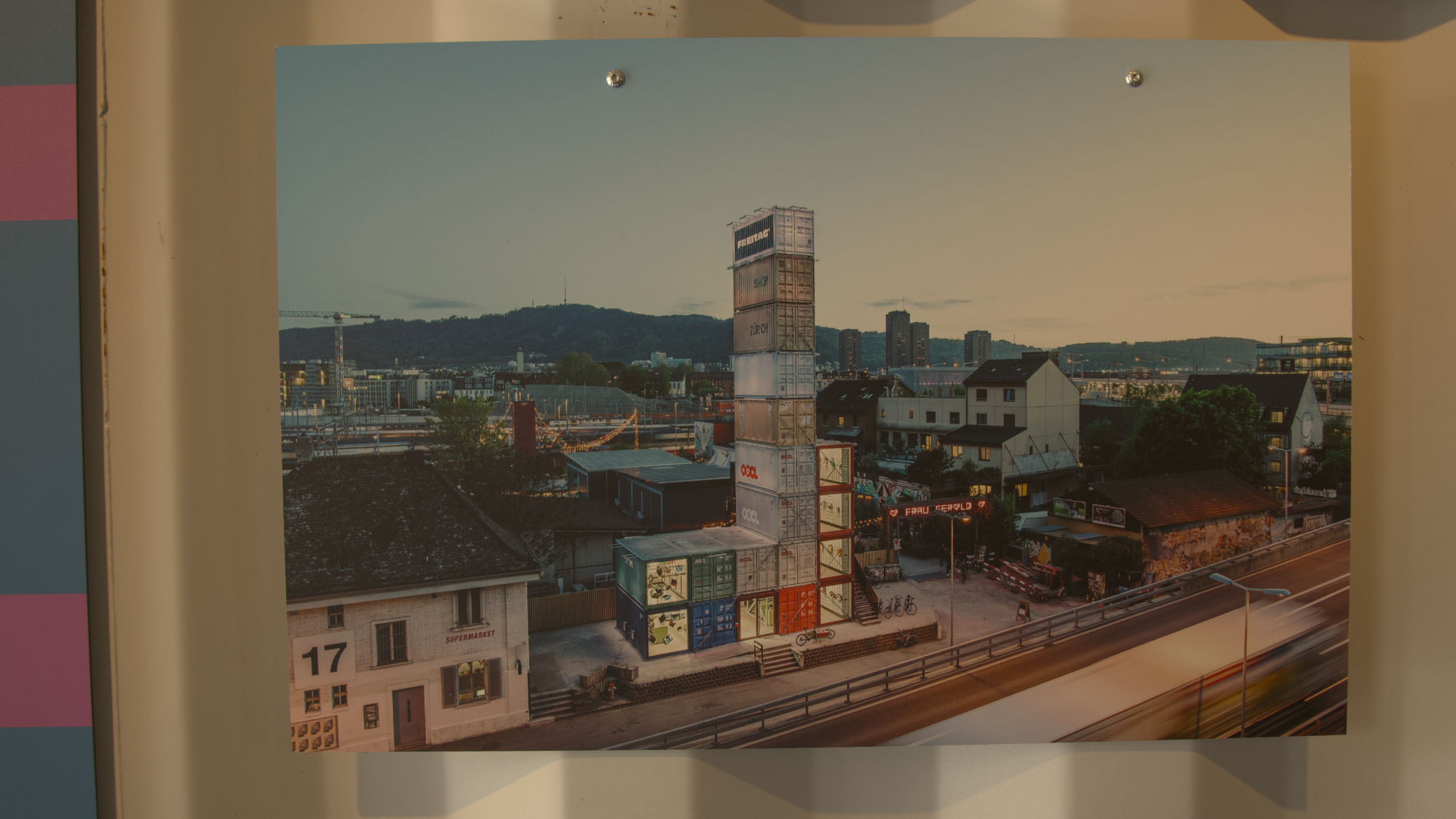
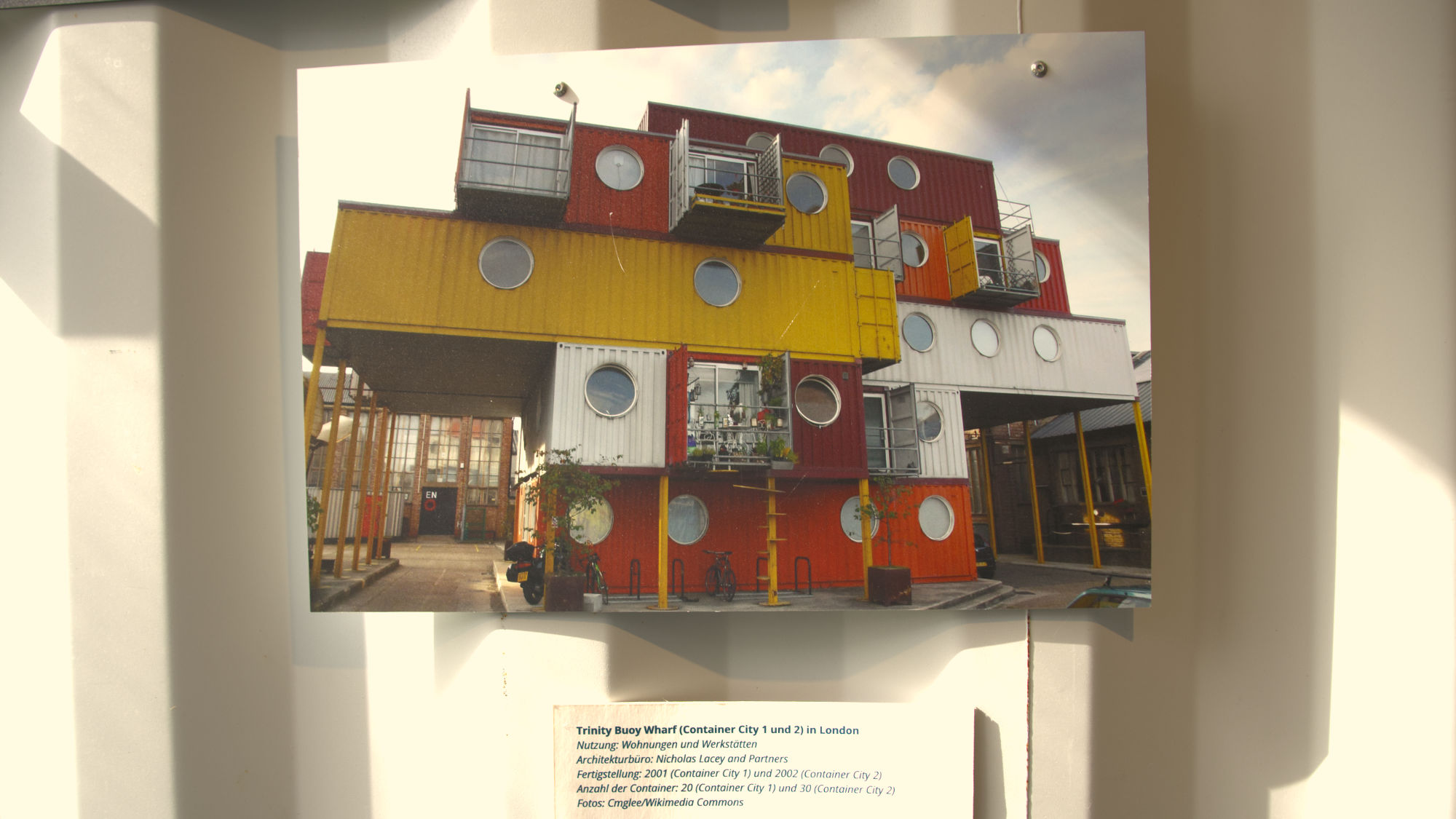
Inside it gave you insight into the concept of modular design; not just shipping containers but also beer crates (in Germany at least), the monoblock chair and IKEA’s Billy shelves. Insight about how containers are used in urban planning and in art. A screen showed clips from movies where where the bad guys hide in or chase the good guys through container environment like a shipping yard.
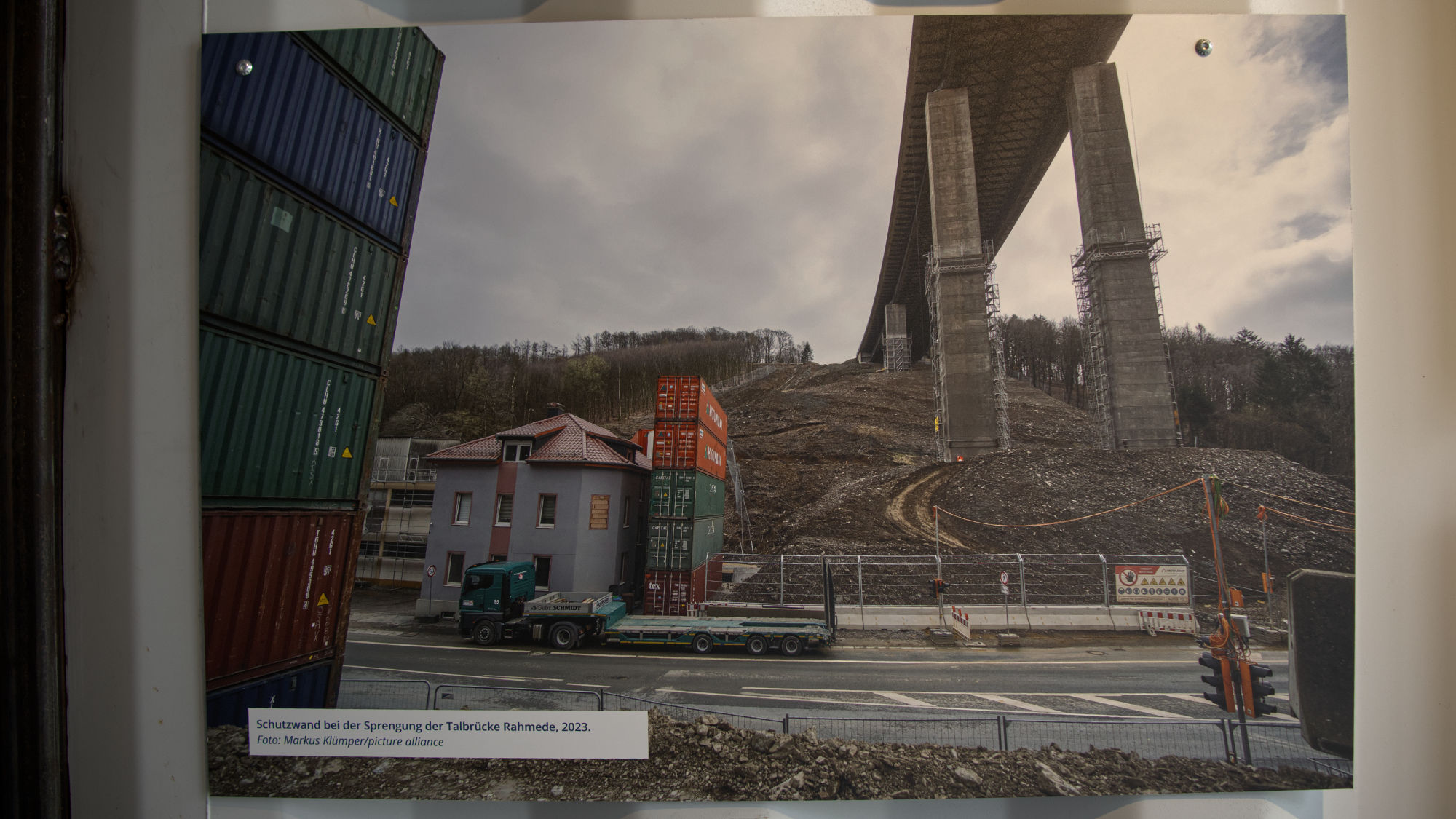
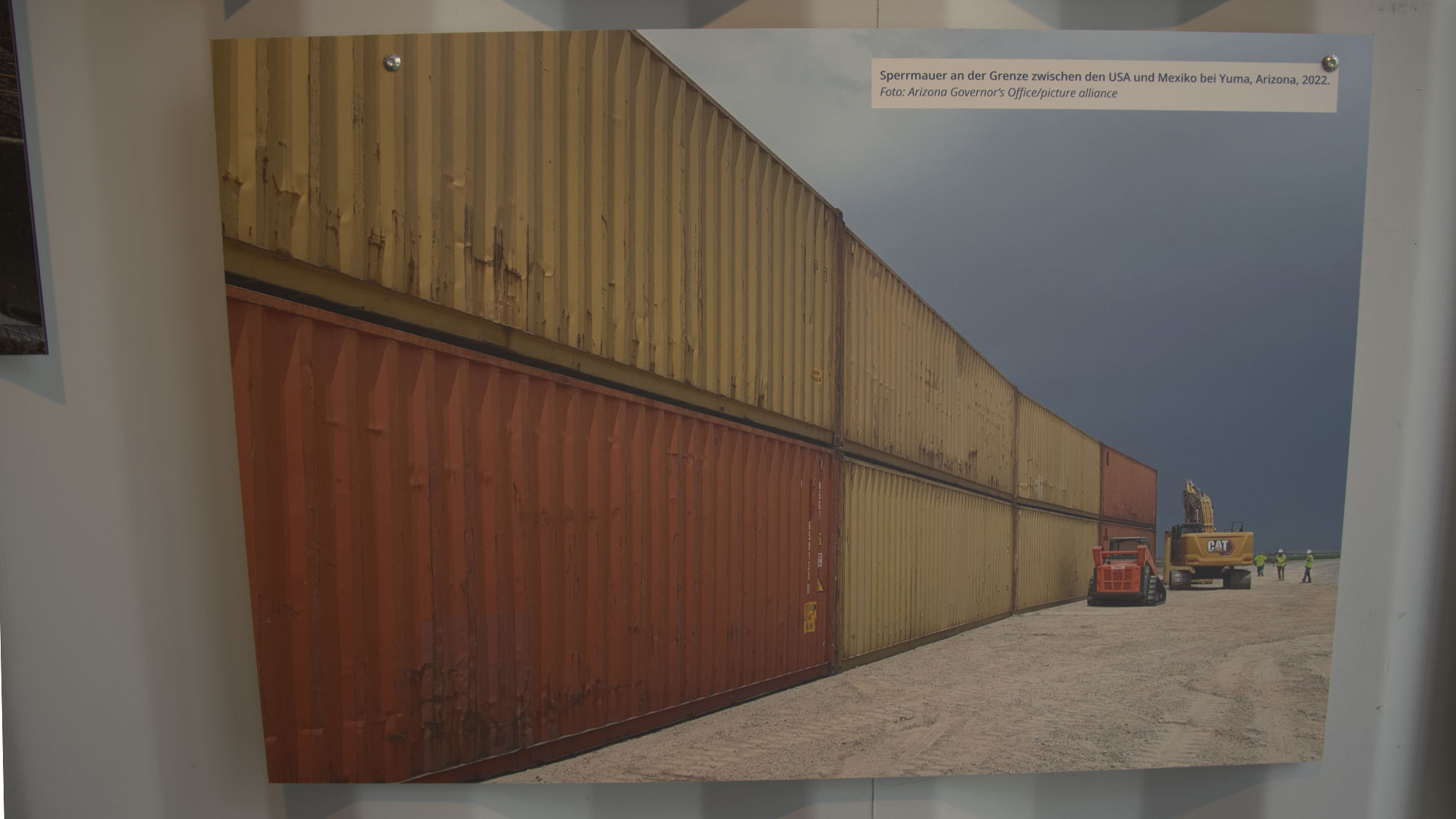
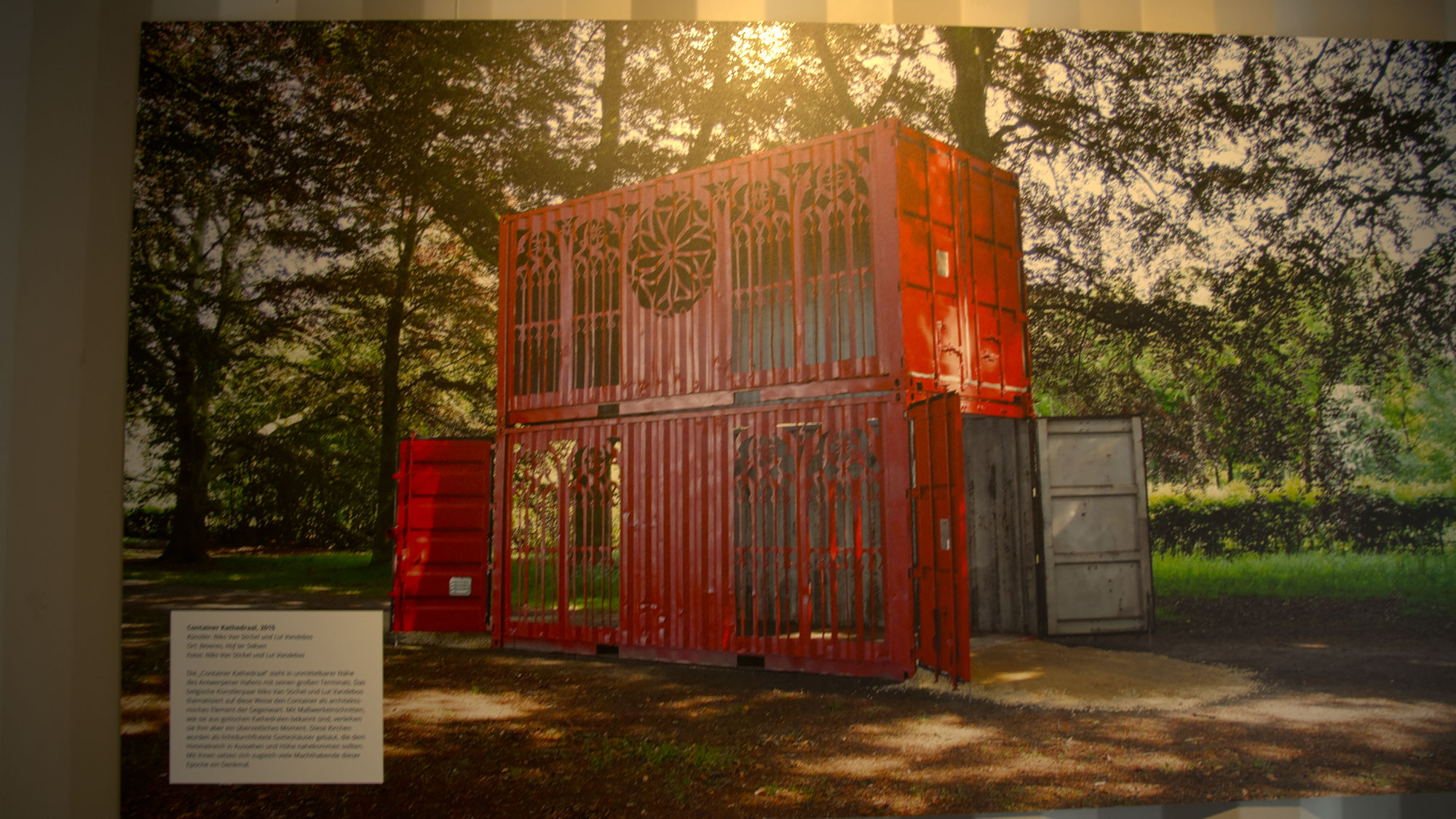
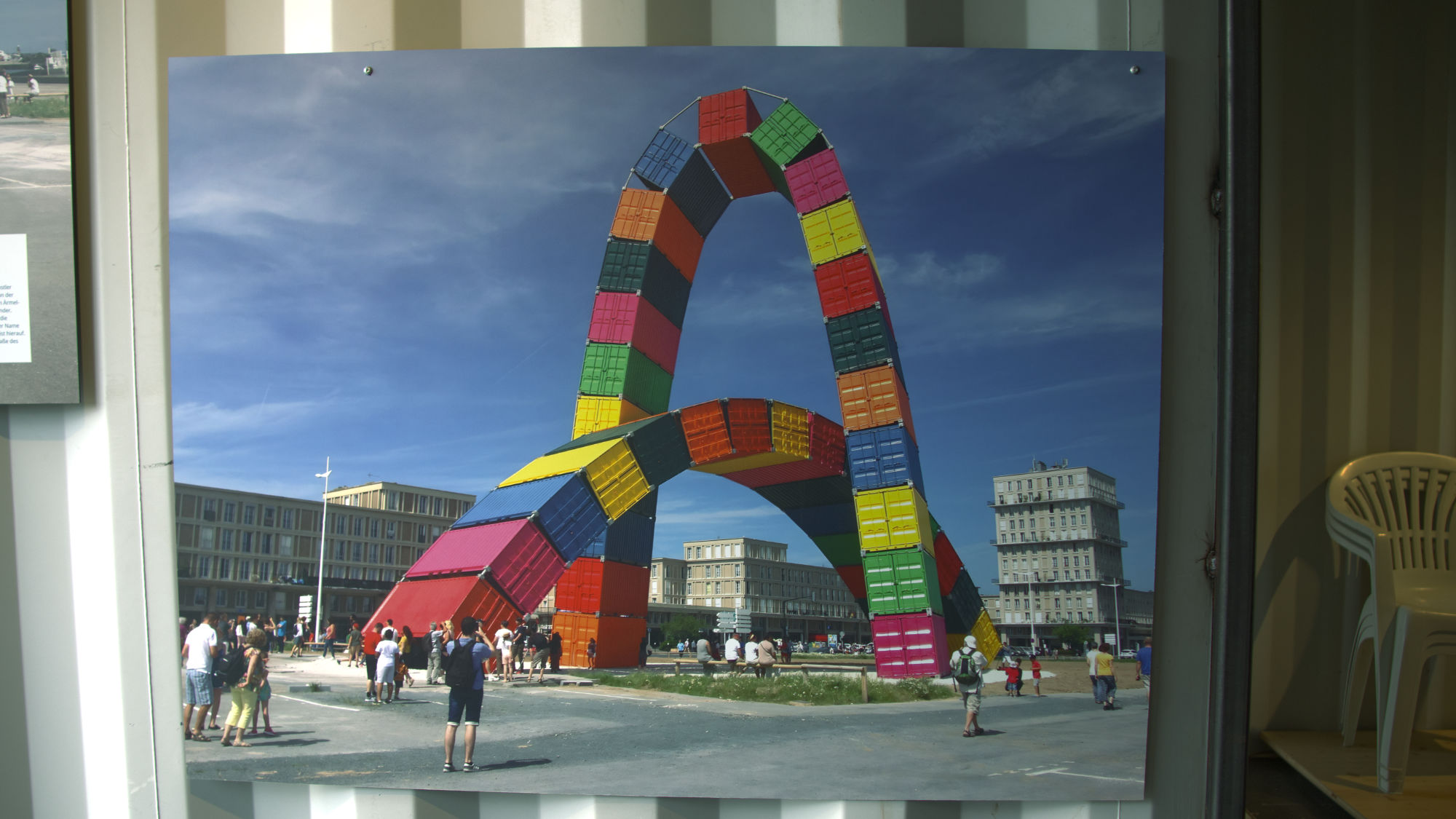
All in all a really interesting exhibition that gave me lots to think and talk about. I’m so glad I made time and went there after all.
